Slab Leak Symptoms — What to Watch For
Slab leaks rarely announce themselves with obvious flooding. Understanding the subtler warning signs is the first step toward stopping damage before it escalates.
An under-slab pipe can leak slowly for weeks or months before the damage becomes visible at floor level. The water escaping the pipe travels through soil — sometimes emerging several feet away from the actual leak point, and sometimes not reaching the surface at all before it begins saturating the foundation soil. Recognizing the indirect signs of a slab leak is what makes early intervention possible.
1. Elevated Water Bills Without Explanation
A sudden or gradual increase in your monthly water bill — without a corresponding change in usage — is one of the most consistent early indicators of an under-slab leak. Even a relatively slow slab leak can add significant water volume over a billing period.
To check: read your meter, then avoid using any water for two hours and read it again. Any change in the meter reading with zero usage confirms water is leaving the system somewhere.
2. Warm or Hot Spots on the Floor
This symptom is specific to hot-water supply line failures — the most common type of slab leak in Fort Worth homes. When a hot-water pipe leaks beneath the slab, the heat from that water warms the concrete and flooring above the leak point.
You may notice: a specific area of tile or hardwood that feels noticeably warmer than surrounding areas, or a carpet area that feels warm underfoot. This symptom is more easily detected with bare feet and is usually consistent — returning to the same area every time you check.
3. Sound of Running Water With Everything Off
If you can hear the sound of water moving through pipes when all fixtures, appliances, and irrigation are off, that water is going somewhere unintended. The sound may come from the floor, a wall, or seem to come from under the house.
The best time to perform this check is at night when household activity is minimal. Shut off all water sources — including the refrigerator ice maker — and stand near the center of the home listening for any sound of water movement.
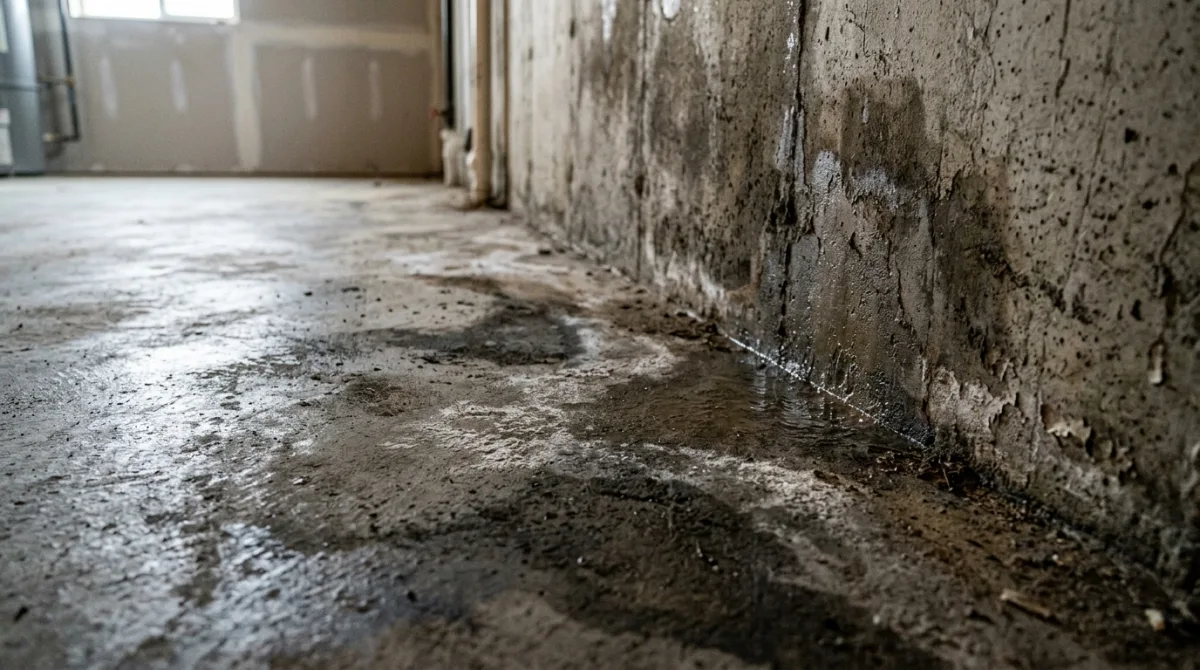
4. Damp, Soft, or Buckling Flooring
Moisture migrating up through the slab from a leak below can cause:
- Carpet that feels damp or wet with no above-slab moisture source
- Hardwood flooring that is cupping, warping, or buckling along a line
- Tile that is loosening at the grout joints along a specific path
- Vinyl flooring that is bubbling or lifting in a localized area
5. Cracks in Walls or Flooring
A long-running slab leak can saturate the soil beneath the foundation, causing differential settlement. In Fort Worth's expansive clay soil, this moisture imbalance can cause the slab to shift unevenly — which manifests as visible cracks. Look for:
- Interior drywall cracks that follow a diagonal or vertical line, particularly near corners of doors and windows
- Floor tile cracks that follow a straight line (following the leak path under the floor)
- Door frames that are no longer square — doors that stick or won't latch properly
6. Reduced Water Pressure
If water pressure has noticeably dropped across multiple fixtures simultaneously, a supply-line leak may be diverting water from the system before it reaches your taps. This symptom is more consistent with a larger or faster leak than with a slow pinhole.
7. Mildew Smell or Unexplained Mold
Persistent moisture beneath or in flooring creates conditions for mold and mildew growth. If you notice a musty smell near baseboards, under carpet, or in a specific room without an obvious source, slab leak moisture is a possibility worth investigating.
Multiple Symptoms Together
One symptom alone — a slightly elevated water bill, for example — doesn't confirm a slab leak. Multiple symptoms together, particularly symptoms pointing to the same area of the floor, make the case much stronger. If you're seeing two or three of these signs, a hydrostatic pressure test is the right next step.
Yes. Continuous moisture beneath or in flooring creates ideal conditions for mold growth — particularly under carpet or in wall cavities adjacent to a slow slab leak. The mold may be present for some time before it becomes visible or produces a noticeable odor.
Yes. Many slab leaks never surface visibly — the water percolates through the soil and either evaporates beneath the slab or migrates laterally without reaching the floor surface. An elevated water bill with an intact meter reading (confirming the meter is working correctly) is reason enough to perform a pressure test, even without visible floor moisture.
Think You're Seeing Slab Leak Symptoms?
A hydrostatic pressure test is the most direct way to confirm whether your plumbing system is losing water. Call today.