Hydrostatic Testing in Fort Worth, TX
Hydrostatic pressure testing is the first step in confirming a slab leak — it identifies which plumbing line is losing pressure before detection equipment is deployed.
A hydrostatic pressure test is a diagnostic tool — its purpose is to confirm that a leak exists in the plumbing system and to identify which line is affected. It does not tell you where the leak is located; that's the job of acoustic or electronic detection equipment. But it's a critical first step that prevents unnecessary detection work and helps focus the repair effort.
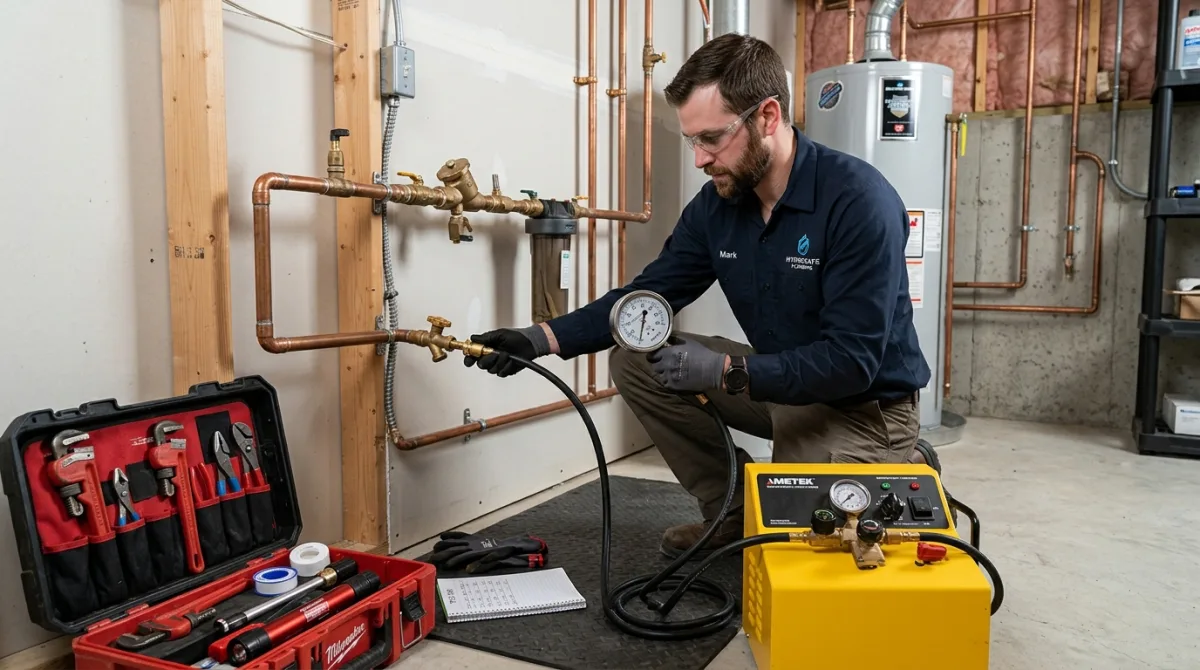
How Hydrostatic Testing Works
The test involves isolating individual plumbing lines — typically the hot water supply, cold water supply, and in some cases the drain system — and checking whether each holds pressure over a measured period.
For supply lines: air or water is introduced into the line at a controlled pressure. A gauge monitors that pressure over time. A line that maintains pressure is intact. A line that shows a pressure drop has a leak somewhere along its run.
For drain lines: the line is plugged and filled with water to check whether it holds. A drop in water level indicates a failure point in the drain system.
Why Test Before Detecting
Without a pressure test, you don't know which line to focus acoustic detection work on. Testing first means detection equipment is deployed on the right line — saving time and avoiding the possibility of spending detection effort on a line that's actually intact.
It also prevents detection work entirely if the test reveals no leak. Some suspected slab leaks turn out not to be leaks in the plumbing at all — they may be condensation, HVAC drainage, or water intrusion from a different source. A pressure test quickly distinguishes plumbing leak from non-plumbing moisture.
Hydrostatic Testing for Foundation Repair
Fort Worth foundation contractors frequently recommend hydrostatic plumbing tests before performing foundation repair work. If a plumbing leak is saturating soil beneath the foundation and causing differential settlement, repairing the foundation without first fixing the plumbing leak means the same problem will recur. Testing the plumbing system before foundation work begins confirms whether plumbing is a contributing factor.
What the Test Results Mean
| Test Result | What It Indicates |
|---|---|
| Hot line fails, cold holds | Leak is in the hot water supply line under the slab |
| Cold line fails, hot holds | Leak is in the cold water supply line |
| Both lines fail | Leaks in both supply systems (less common but occurs in heavily corroded systems) |
| Both lines hold | Supply system is intact; investigate drain lines or non-plumbing moisture sources |
| Drain line fails | Failure in the drain/waste system under the slab |
A hydrostatic test for residential supply lines typically takes 1–2 hours, including setup, pressurization, and the monitoring period. More complex systems or situations requiring multiple line tests may take longer.
It's not a legal requirement, but it's strongly recommended as a standard practice. Skipping the pressure test and going directly to acoustic detection risks wasting detection time on the wrong line — or missing that the plumbing system is actually intact and the moisture issue has a different source.
A basic check: shut off all water use in the house (including ice makers and appliances). Go to your water meter and check whether the flow indicator or dial is moving. Movement with everything off indicates water is leaving the system somewhere. This is preliminary — a professional pressure test is needed to confirm and isolate the leak.
Need a Plumbing Pressure Test in Fort Worth?
Call to schedule a hydrostatic test. It's the right starting point for any suspected slab leak or unexplained water bill increase.